
Top Exterior Waterproofing Solutions to Protect Minneapolis Homes from Water Damage
Exterior waterproofing keeps water away from a building’s foundation and basement walls, stopping moisture before it breaches the building envelope. That’s especially important in Minneapolis, where heavy spring snowmelt and repeated freeze‑thaw cycles put extra stress on foundations. This guide walks through why exterior water problems start here, compares the most reliable exterior foundation solutions, and explains drainage systems designed to relieve hydrostatic pressure before it becomes structural damage. You’ll get clear, practical explanations of membranes, cementitious coatings, French drains, sump pumps, grading fixes, and focused crack repairs — plus straightforward guidance on selecting materials, routine upkeep, and Minneapolis‑specific cost ranges. Together these steps form a logical plan: diagnose the cause, pick the right membrane or drainage fix, complete repairs, and follow seasonal maintenance so water stays out for the long haul. Throughout, we use local soil and climate context — clay soils, freeze‑thaw action, and snowmelt pulses — to show why exterior approaches often outperform interior‑only remedies for many Minneapolis homes.
What Causes Exterior Water Damage to Foundations in Minneapolis?
Exterior water damage starts when surface water or groundwater overwhelms the building envelope and creates hydrostatic pressure that forces moisture through tiny cracks and porous materials. In Minneapolis, high clay content in soils and frequent freeze‑thaw cycles increase lateral pressure and open micro‑cracks in concrete and masonry, so the problem is both hydraulic and mechanical. Understanding these drivers helps homeowners choose fixes that stop water at the source instead of merely treating symptoms. The rest of this section breaks down the main causes and how they lead to visible or structural signs that need attention.
How Do Freeze‑Thaw Cycles and Clay Soil Affect Foundation Walls?
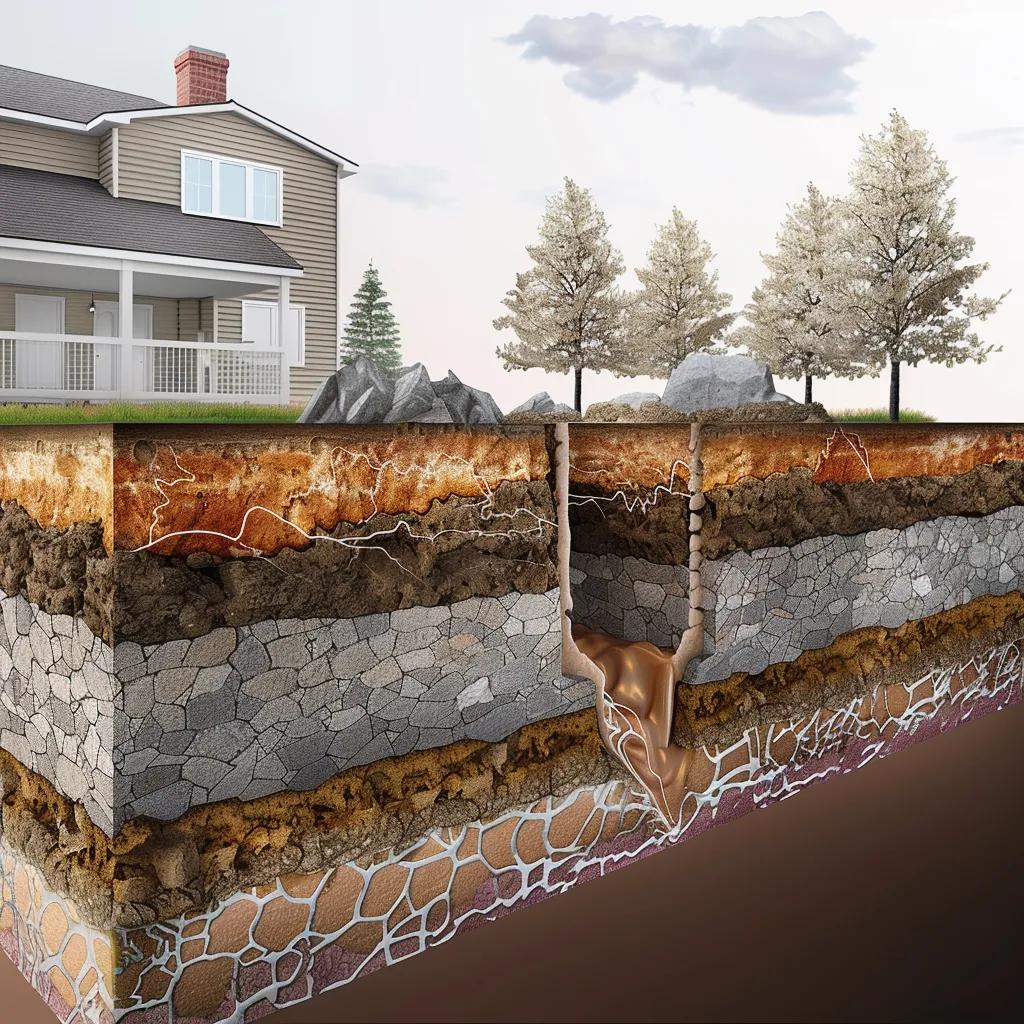
Freeze‑thaw cycles make moisture in and near foundation materials expand and contract repeatedly. Over seasons this enlarges pores and turns hairline cracks into through‑cracks. Clay soils around Minneapolis absorb water and swell, then shrink as they dry and freeze, creating lateral pressure that can push on foundation walls and shift footings. Those combined forces speed up crack formation and weaken waterproofing layers, so externally applied membranes and solid drainage become more important than simple interior patching. Improving soil drainage and using flexible exterior barriers reduces the mechanical stress that increases water entry over time.
What Are the Common Signs of Exterior Water Damage on Basement Walls?
Look for visible stains, white mineral deposits (efflorescence), peeling exterior paint, or surface spalling — all signs moisture is moving through walls from outside. Structural warning signs include horizontal cracks, bowing or outward movement, and repeatedly wet spots after snowmelt or heavy rain; each indicates different urgency and may need excavation or professional repair. Odors tied to moisture, mold growth in basements, and damp insulation are early red flags that, left unchecked, often lead to more expensive foundation work. Early detection and targeted exterior fixes limit repair scope and long‑term cost.
Which Exterior Foundation Waterproofing Methods Are Most Effective?
Effective exterior waterproofing combines barriers and drainage to keep water off the foundation envelope: either stop water at the wall or redirect it before hydrostatic pressure builds. Leading exterior methods include continuous waterproofing membranes, exterior French or perimeter drains, and grading improvements — each tackles a different stage of the wetting pathway. The right mix depends on foundation condition, soil type, and local freeze‑thaw stress, and most durable solutions pair two or more methods. Below we compare membrane options and then cover cementitious and damp‑proofing choices to help match materials to site conditions.
Why compare membranes? Material chemistry determines flexibility, adhesion, and freeze‑thaw resilience — the traits that drive long‑term performance in Minneapolis.
This comparison shows polymers like polyurethane shine at flexibility and crack‑bridging, while sheet products are cost‑effective for straightforward walls. The right choice follows a site assessment that accounts for soil movement and expected freeze‑thaw stress.
What Types of Waterproofing Membranes Protect Exterior Foundations?
Membranes come as liquid‑applied systems and sheet‑applied systems. Liquids cure to a seamless membrane that bridges small cracks; sheets are factory‑made barriers installed with overlaps. Liquid polyurethane adheres well to irregular surfaces and keeps elastic through freeze‑thaw cycles, useful in Minneapolis where walls may crack or settle. Sheet membranes (bituminous or rubberized asphalt) provide robust physical protection but should be backed by a drainage layer or protection board to prevent damage during backfill. Often the best result pairs a waterproof membrane with a drainage board and perimeter drain to move water away before it ever reaches the membrane.
Selecting Below-Grade Waterproofing Systems and Materials
Choosing the right combination of systems and materials is essential for successful below‑grade waterproofing. Modern options have expanded the ways contractors solve these problems.
The manual of below-grade waterproofing, 2016
How Do Cementitious Coatings and Damp Proofing Work for Exterior Walls?
Cementitious coatings are mineral‑based mixes applied to masonry or poured concrete to fill surface pores and form a rigid moisture barrier; they bond mechanically and are cost‑effective. Damp proofing, on the other hand, repels surface moisture but isn’t intended to resist sustained hydrostatic pressure — it’s suitable where surface dampness, not groundwater, is the main issue. In Minneapolis, cementitious coatings can be useful for minor seepage or as a prep layer before installing a membrane, while continuous exterior waterproofing membranes are the preferred solution where groundwater and hydrostatic pressure are present. Remember permeability: cementitious coatings lower vapor transmission but do not replace a continuous exterior waterproof membrane under heavy hydrostatic loads.
How Do Exterior Drainage Systems Prevent Basement Water Intrusion?
Exterior drainage systems lower groundwater levels and relieve hydrostatic pressure so foundation walls aren’t forced to hold back subsurface water. The approach is simple: intercept water close to the foundation and carry it away through permeable media and piping to a safe discharge point or sump. French drains and perimeter systems collect subsurface flow; grading and gutter systems handle surface runoff; sump pumps remove water where gravity discharge isn’t possible. A well‑designed system combines collection, filtration, conveyance, and discharge to protect foundations for decades.
This section includes a comparison table of drainage options to help match a solution to site conditions.
The table makes clear: French drains are the strongest option for subsurface water, while grading and gutters are lower‑cost first steps every homeowner should prioritize. Maintenance varies by system; combining grading, functioning gutters, and a perimeter drain where needed gives layered protection that’s especially valuable in Minneapolis’s changeable precipitation and melt cycles.
What Is a French Drain and How Does It Protect Your Home?
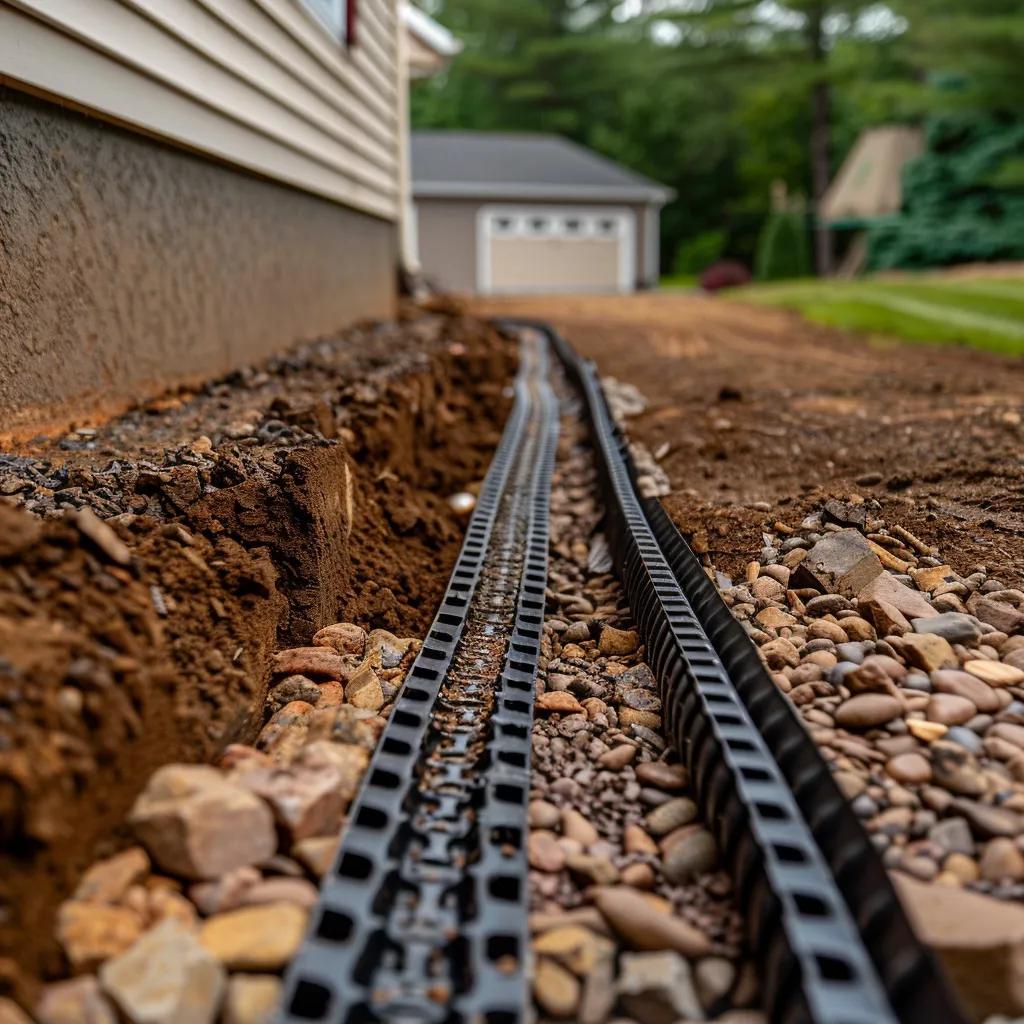
A French drain is a trench assembly with a perforated pipe set in clean gravel and wrapped in filter fabric. It captures subsurface water and channels it away from the foundation. Installation typically requires trenching to the footing level, laying filter fabric and gravel, placing a perforated pipe with proper slope, and backfilling with aggregate to maintain permeability. By providing a low‑resistance path for groundwater, the drain reduces hydrostatic pressure so water doesn’t push against the foundation wall. Homeowners should confirm a proper outlet or sump connection and perform routine inspections of catchment and discharge points to keep the system working.
- Trench to footing: Excavate to the correct depth and slope.
- Add filter fabric and gravel: Keep sediment from clogging the pipe.
- Lay perforated pipe and backfill: Create a reliable path for water to reach the discharge point.
French drains work because they treat the root hydraulic problem: move water away before it exerts pressure on the wall.
How Do Sump Pumps, Yard Grading, and Gutter Extensions Improve Drainage?
Sump pumps actively remove water collected by drains when gravity discharge isn’t possible, routing it to an approved exterior outlet or storm system; pumps need reliable power and float sensors and should be tested regularly. Proper yard grading — ideally a 6‑inch drop over the first 10 feet — keeps surface runoff from pooling near foundations; swales and permeable landscaping can further direct water. Extending gutters and downspouts 6–8 feet or into a daylighted swale prevents saturation at the footing. Using these measures together reduces both surface and subsurface water pressure and extends membrane life.
What Exterior Wall Repair and Sealant Solutions Combat Water Damage?
Fixing cracks and using the right sealants are critical to stop water migration through damaged areas before or during exterior waterproofing. Repairs range from surface patching for hairline cracks to injection systems — epoxy for structural bonding or polyurethane for active leaks — and structural stitching or underpinning for serious movement. Choose sealants based on expected joint movement, adhesion to masonry or concrete, and resistance to weathering; matching material properties to site conditions prevents premature failure. Below we outline common repair approaches and recommend sealant chemistries for different scenarios.
How Does Exterior Foundation Crack Repair Prevent Water Entry?
Crack repair starts with assessment: non‑moving shrinkage cracks are often suitable for epoxy injection to restore structural bond, while active, water‑bearing cracks usually require expanding polyurethane injections that seal under wet conditions. Larger structural cracks or moving walls may need excavation and reinforcement or underpinning before sealing. Injection methods push resin into voids and behind the wall to re‑establish a continuous barrier, stopping water and allowing subsequent exterior waterproofing to perform as intended. Proper sequencing — repair first, then membrane and drainage — prevents repairs being undone by ongoing moisture.
Which Sealants Are Best for Waterproofing Exterior Basement Walls?
Sealants for exterior foundations must balance adhesion, elasticity, and weathering resistance. Common options include silicone, polyurethane, and masonry‑specific hybrid sealants chosen for their performance traits. Silicone is UV‑stable and stays flexible but may need a primer on some concrete surfaces. Polyurethane bonds strongly and handles joint movement well, making it a good choice where thermal cycling occurs. Masonry hybrids combine properties tuned for porous substrates. Select products labeled for foundation or masonry use and follow manufacturer prep guidance for a lasting seal.
- Silicone sealants: Long‑lasting and UV‑stable — best for fixed joints.
- Polyurethane sealants: Excellent adhesion and flexibility — suited to moving joints.
- Masonry hybrids: Formulated to bond well to concrete and absorbent substrates.
Pick sealants listed for foundation use and follow surface prep instructions to ensure a durable result.
What Are the Benefits and Costs of Exterior Waterproofing in Minneapolis?
Exterior waterproofing delivers tangible homeowner benefits: less mold and damp odor, lower long‑term structural repair costs, better indoor air quality, and higher resale appeal since visible exterior protections reassure buyers and inspectors. In Minneapolis, exterior solutions also handle seasonal snowmelt and freeze‑thaw mechanics, producing more durable outcomes where soil movement and groundwater are major contributors to foundation moisture. Below are Minneapolis‑specific cost ranges for common exterior services to help weigh investment versus benefit.
Note: local factors — soil type, footing depth, yard access, and routing discharge — drive final pricing. Expect variation within the ranges below.
This cost snapshot explains why larger exterior projects cost more upfront but typically reduce repeat interior repairs. A combined approach often delivers the best lifecycle value. Major cost drivers include excavation difficulty, depth to footing, need for protection board, and disposal or restoration requirements.
When deciding if exterior work is worthwhile, consider these core benefits:
- Long‑term structural protection: Slows wall deterioration and reduces costly future repairs.
- Health and livability: Eliminates recurring dampness and mold that harm indoor air quality.
- Market value: Documented exterior systems reassure buyers and inspectors.
For Minneapolis homeowners seeking professional help, MDry Basement Waterproofing Minneapolis offers interior and exterior services: French drain installation, exterior membranes, foundation crack repair, sump pump installation, and crawl space encapsulation. MDry focuses on local soil and climate conditions, is MN licensed and insured, provides free estimates, and offers flexible payment options to help prioritize durable exterior protection.
How Does Exterior Waterproofing Increase Home Value and Structural Integrity?
Exterior waterproofing preserves foundation geometry and prevents progressive deterioration, lowering the chance of expensive underpinning or structural stabilization later. On resale, documented exterior systems and drainage reduce buyer concerns and often improve inspection outcomes. Structurally, keeping hydrostatic pressure off walls slows crack growth and limits corrosion of embedded steel, protecting the home’s overall integrity. These effects lead to measurable reductions in future repair costs and a healthier long‑term property condition.
What Is the Typical Cost Range for Exterior Waterproofing Services in Minneapolis?
Minneapolis projects vary from smaller targeted repairs and localized French drain work costing a few thousand dollars to full‑perimeter solutions that reach the higher ranges in our table. An average single‑family exterior waterproofing job often falls near the mid‑range. Per‑linear‑foot estimates for French drains commonly sit in the $20–$30 per foot band on sites with moderate excavation and finish restoration. Major complicators — big tree roots, deep foundations, or required structural fixes — increase cost and should appear in an itemized estimate.
How Can Homeowners Maintain Exterior Waterproofing Systems for Long‑Term Protection?
Longevity depends on routine inspections, seasonal prep around spring thaw and before winter, and timely maintenance of drainage components and sealants. A simple schedule prevents clogs, preserves discharge paths, and spots early wear on membranes and protection boards. The guidance below helps homeowners keep systems performing year after year.
What Seasonal Inspections and Repairs Are Recommended for Exterior Waterproofing?
Do a visual check quarterly and a more thorough inspection after spring melt and major storms. Look for pooled water near the foundation, visible membrane damage, and clogged outlets. Test sump pumps before the wet season and again before winter; verify float operation and backup power if you have it. Inspect downspout extenders and swales after heavy runoff, and call a pro if you see new cracks, efflorescence, or repeat seepage. Small repairs early save you from big excavation work later.
- Spring (after thaw): Inspect membranes, check interior walls for new damp spots, and clean gutters.
- Summer: Confirm swales and grading are intact and vegetation isn’t blocking drainage.
- Fall: Remove leaves from gutters and test sump pumps.
- Winter prep: Secure downspout extenders and protect exposed pump equipment.
Consistent seasonal checks and tasks preserve membrane and drainage performance and cut down on unexpected failures.
How Does Proper Gutter and Downspout Maintenance Support Exterior Waterproofing?
Gutters capture roof runoff and keep it from saturating soil next to the foundation. Downspouts extended 6–8 feet or routed to a daylighted swale prevent discharge from re‑wetting the immediate footing zone. Clean gutters at least twice a year — more often if you have heavy tree cover — to avoid overflows that concentrate water at the base of walls. Check extenders and splash blocks after storms and replace or repair sections that allow splash‑back onto the foundation. Good gutter and downspout care is a low‑cost defense that complements subsurface drainage and exterior membranes.
- Recommended maintenance: Clean gutters spring and fall, inspect extenders after storms, and ensure downspouts discharge to stable ground or a drainage system.
- Common mistakes: Leaving extenders too short, allowing soil to settle against the foundation after grading, and ignoring clogged gutter guards.
Proper gutter and downspout upkeep is the first line of defense and supports deeper exterior waterproofing measures.
For homeowners who want a professional assessment or installation, MDry Basement Waterproofing Minneapolis offers free estimates and handles exterior solutions like French drains, exterior membranes, foundation crack repair, sump pump installation, and crawl space encapsulation tailored to Minneapolis conditions. To discuss options or request a free exterior waterproofing estimate, contact MDry at mdrybasementwaterrpoofing@gmail.com or by phone at +1-763-363-3686.
Frequently Asked Questions
What is the difference between waterproofing and damp proofing?
Waterproofing is built to stop water from penetrating a structure, even under high hydrostatic pressure. Damp proofing primarily resists surface moisture but does not handle prolonged groundwater pressure. In Minneapolis, where groundwater and freeze‑thaw cycles are common, true waterproofing is usually the better long‑term choice. Damp proofing can work for minor surface moisture problems, but it’s not suitable where significant water exposure exists. Homeowners should evaluate their site conditions to pick the right approach.
How often should I inspect my exterior waterproofing systems?
Do a visual check at least quarterly and inspect more thoroughly after major weather events like heavy rain or spring thaw. Look for pooled water, membrane damage, and clogged outlets. Regular inspections catch problems early, preventing costly repairs and helping systems perform reliably over time. Seasonal checks are especially important in a climate with large thaw cycles.
Can I perform exterior waterproofing myself, or should I hire a professional?
Some homeowners tackle small projects themselves, but professional installation is often recommended for reliable, long‑lasting results. Pros assess site conditions, select the right materials, and ensure proper installation of membranes, drains, and protection boards. In Minneapolis, where soil and climate factors add complexity, experienced contractors deliver better outcomes and can offer warranties and maintenance plans that reduce long‑term costs.
What are the signs that my waterproofing system needs repair?
Signs of needed repair include visible water stains on walls, efflorescence, peeling paint, or damp spots in the basement. Structural indicators such as horizontal cracks or bowing walls are more urgent and require immediate attention. If moisture problems recur after heavy rain or snowmelt, investigate the underlying causes promptly. Early fixes prevent larger, more expensive repairs later.
How do I choose the right waterproofing membrane for my home?
Choose a membrane based on foundation type, soil conditions, and local climate. In Minneapolis, pick materials that tolerate freeze‑thaw cycles and hydrostatic pressure. Liquid‑applied membranes give seamless coverage and flexibility; sheet membranes provide physical durability. Have a professional assess your foundation so you can balance durability, cost, and expected movement when selecting a membrane.
What maintenance is required for exterior waterproofing systems?
Maintenance includes regular inspections, cleaning gutters, and keeping drainage systems clear of debris. Repair cracks or membrane damage promptly. Seasonal tasks — testing sump pumps and verifying downspouts are extended — help avoid failures. With routine care, these systems last longer and lower the chance of water intrusion and related damage.
Conclusion
Exterior waterproofing is a practical, proven way to protect Minneapolis homes from water damage and preserve structural integrity. By addressing local soil and climate challenges, homeowners can reduce costly repairs, improve indoor air quality, and increase long‑term property resilience. For tailored solutions and a professional assessment, contact MDry Basement Waterproofing — we’ll help you choose the right approach for your home and conditions.